AI Sentiment Analysis for Marketers: A Practical Guide to Build Brand Trust in 2026
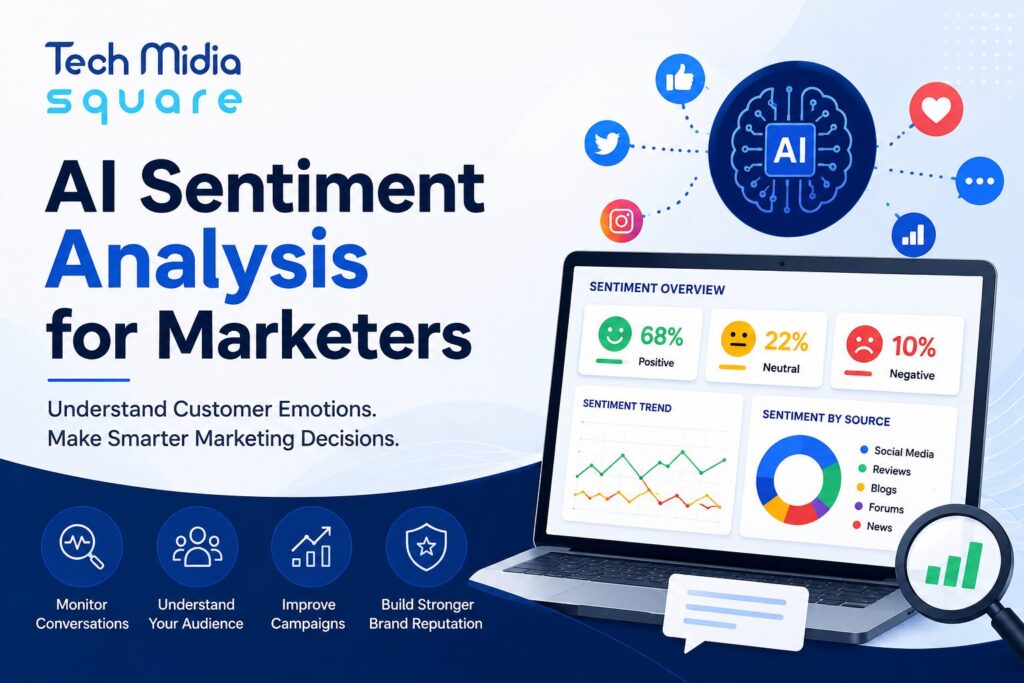
Digital marketing is changing rapidly. Ranking on Google is no longer enough to stay ahead of competitors. Customers are using AI tools to research products, compare brands, and make purchase decisions faster than ever before.
Before buying a product or hiring a service provider, many users now ask AI-powered platforms for recommendations instead of manually visiting multiple websites.
This shift has made AI sentiment analysis an essential strategy for modern marketers.
AI sentiment analysis helps businesses understand how customers feel about their brand by analyzing reviews, social media conversations, blogs, forums, and customer feedback. Instead of guessing what customers think, marketers can use AI to measure emotions and make data-driven decisions.
Brands that understand customer sentiment can build stronger relationships, improve brand reputation, and create marketing campaigns that genuinely connect with their audience.
What Is AI Sentiment Analysis?
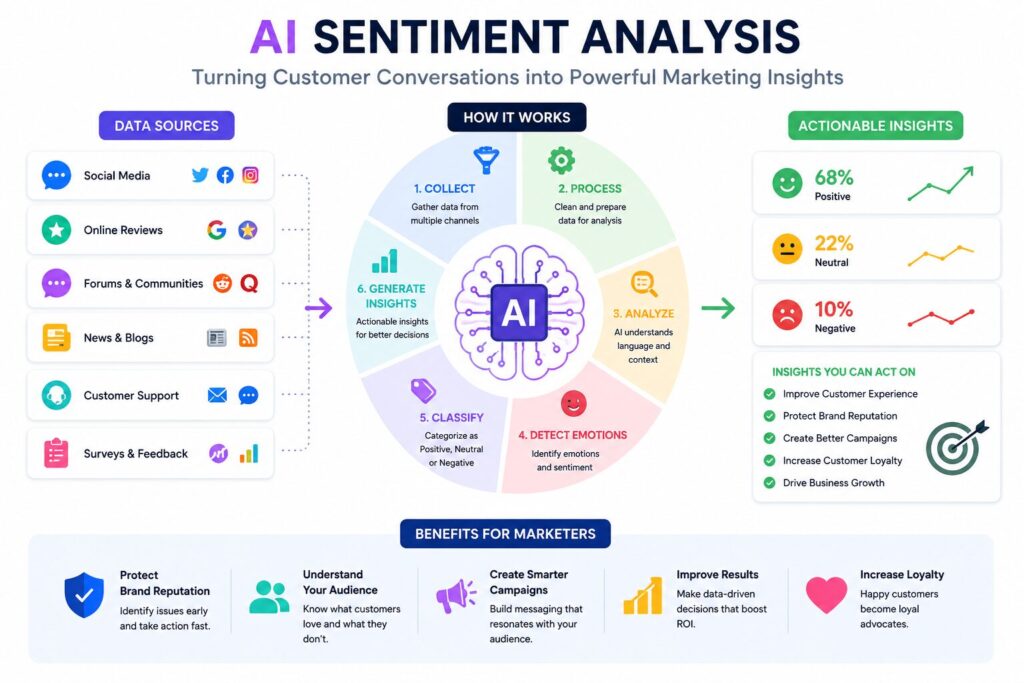
AI sentiment analysis is the process of using Artificial Intelligence, Natural Language Processing (NLP), and machine learning to identify the emotional tone behind customer conversations.
The technology analyzes large amounts of text and classifies opinions into three categories:
- Positive sentiment
- Negative sentiment
- Neutral sentiment
It can analyze information from various digital channels, including:
- Customer reviews
- Social media posts
- Blog comments
- News websites
- Online communities
- Surveys
- Emails
- Customer support conversations
The goal is to transform customer feedback into meaningful insights that businesses can act upon.
Why AI Sentiment Analysis Matters for Marketers
Customer expectations have changed significantly over the last few years.
People want authentic experiences and trustworthy brands. They rely heavily on online opinions before making decisions.
AI sentiment analysis helps marketers understand those opinions at scale.
Build Stronger Brand Trust
Trust has become one of the most important factors in digital marketing.
Customers are more likely to engage with brands that have positive reviews and consistent messaging.
By monitoring sentiment, businesses can identify reputation issues early and respond quickly.
Understand Customer Needs
Customer feedback often reveals hidden pain points.
AI helps marketers identify:
- Frequently asked questions
- Customer frustrations
- Product improvement opportunities
- Service gaps
These insights allow businesses to improve their offerings.
Improve Marketing Campaigns
Marketing campaigns become more effective when they address real customer concerns.
Instead of creating generic content, marketers can create targeted campaigns based on customer sentiment.
Increase Customer Retention
Businesses that actively listen to their customers can solve problems before customers leave.
Satisfied customers are more likely to become loyal customers.
How AI Sentiment Analysis Works
AI sentiment analysis follows a simple five-step process.
Step 1: Collect Data
AI gathers information from multiple sources such as social media platforms, review websites, and customer feedback channels.
Step 2: Process the Data
The system removes unnecessary words, duplicate content, and spam.
Step 3: Analyze Language
AI studies sentence structure, keywords, and context to understand customer intent.
Step 4: Detect Emotions
The technology identifies emotions such as:
- Happiness
- Satisfaction
- Excitement
- Frustration
- Anger
- Disappointment
Step 5: Generate Insights
The system provides actionable recommendations that marketers can use to improve customer experiences.
Key Benefits of AI Sentiment Analysis
Better Brand Reputation Management
Businesses can detect negative feedback early and take corrective action before it damages their reputation.
More Effective Content Marketing
Customer conversations reveal what audiences actually care about.
This allows marketers to create useful and relevant content.
Improved Customer Experience
Understanding customer pain points helps businesses provide better solutions.
Higher Conversion Rates
Customers trust brands with positive online reputations.
Strong trust often leads to higher conversions.
Smarter Business Decisions
AI removes guesswork and allows marketers to make decisions based on data.
Common Marketing Use Cases
AI sentiment analysis can be applied across multiple marketing activities.
Social Media Monitoring
Track customer opinions across different platforms.
Online Review Management
Monitor reviews and respond to customer concerns quickly.
Competitor Analysis
Identify competitor strengths and weaknesses.
Campaign Performance Analysis
Measure how audiences react to marketing campaigns.
Customer Support Optimization
Understand recurring customer issues and improve support services.
Reputation Management
Protect and strengthen your brand image.
Best AI Sentiment Analysis Tools
Several tools can help businesses monitor customer sentiment.
| Tool | Primary Use |
|---|---|
| Semrush | Brand visibility monitoring |
| Brandwatch | Enterprise sentiment tracking |
| Sprout Social | Social media monitoring |
| Talkwalker | Reputation management |
| Hootsuite | Social listening |
| MonkeyLearn | Text analysis |
Choose a platform that matches your business size and goals.
How to Implement AI Sentiment Analysis in Your Marketing Strategy
Follow these simple steps.
1. Define Your Goals
Decide what you want to measure.
Examples include:
- Customer satisfaction
- Brand reputation
- Campaign performance
2. Identify Data Sources
Track the channels your customers use the most.
3. Analyze Customer Feedback
Look for recurring patterns and trends.
4. Address Negative Feedback
Respond quickly to customer concerns.
5. Create Better Content
Use customer insights to develop helpful content.
6. Monitor Performance Regularly
Review your sentiment data every month.
Consistency is key to long-term success.
Common Mistakes Marketers Should Avoid
Many businesses make these mistakes:
- Ignoring customer reviews
- Monitoring only social media
- Reacting too slowly to negative feedback
- Not tracking competitors
- Creating content without customer insights
- Using outdated customer data
Avoiding these mistakes will help improve results.
The Future of AI Sentiment Analysis
AI sentiment analysis will continue to evolve.
Businesses can expect advancements such as:
- Real-time monitoring
- Predictive sentiment analysis
- Voice sentiment analysis
- Video sentiment analysis
- AI-powered customer insights
Companies that adopt these technologies early will have a competitive advantage.
How Tech Midia Square Helps Businesses
At Tech Midia Square, we help businesses use AI-driven strategies to strengthen their online presence.
Our services include:
- Search Engine Optimization (SEO)
- Content Marketing
- Reputation Management
- Competitor Analysis
- AI Search Optimization
- Digital Marketing Strategy
Our goal is to help businesses build trust, improve visibility, and create meaningful customer experiences.
Conclusion
AI sentiment analysis is no longer a future trend. It is a marketing necessity.
Understanding customer emotions helps businesses create better content, improve customer experiences, and strengthen brand reputation.
Successful marketing is no longer only about rankings and traffic. It is about building trust.
Brands that listen to their customers and act on feedback will be better positioned to grow in an increasingly AI-driven digital landscape.
FAQs
What is AI sentiment analysis?
AI sentiment analysis uses Artificial Intelligence to determine whether customer opinions are positive, negative, or neutral.
Why is AI sentiment analysis important for marketers?
It helps marketers understand customer emotions, improve customer experiences, and strengthen brand reputation.
Can AI sentiment analysis improve SEO?
Yes. Positive customer sentiment can improve brand authority and support overall SEO efforts.
Which businesses can benefit from AI sentiment analysis?
E-commerce, healthcare, SaaS, local businesses, agencies, and service-based businesses can all benefit.
How often should businesses monitor customer sentiment?
Businesses should monitor customer sentiment regularly, ideally every week or every month.