Ecommerce SEO: How to Optimize Product and Category Pages
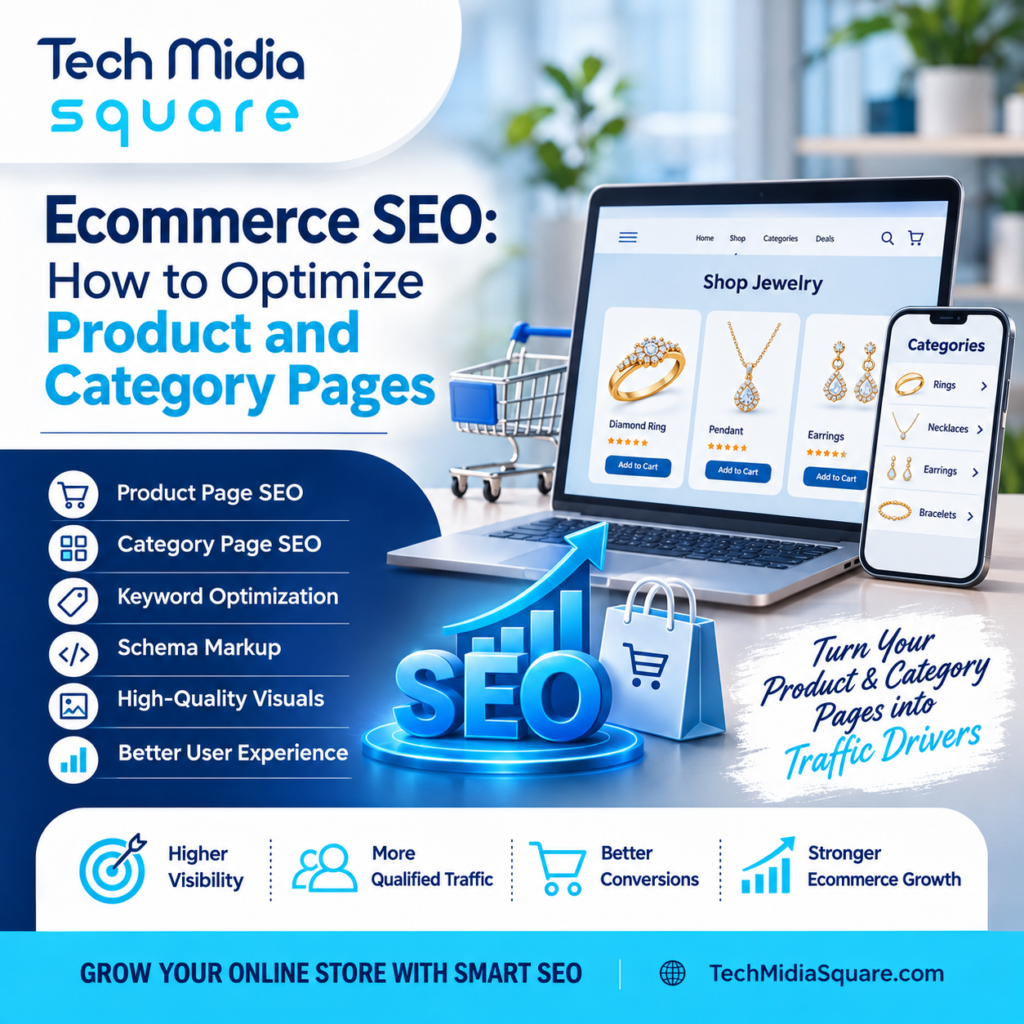
Getting visitors to your online store is only half the battle. If shoppers can’t find the right products, understand their benefits, or compare their options, they’ll likely leave without making a purchase.
That’s where Ecommerce Product Page SEO becomes important. A well-optimized e-commerce website helps search engines understand your products while making it easier for potential customers to find what they’re looking for.
For U.S. businesses competing in crowded markets, optimizing product and category pages can improve organic visibility, attract high-intent shoppers, and support more sales.
At Tech Midia Square, we help businesses strengthen their e-commerce search presence through strategic SEO, technical optimization, and user-focused website improvements.
Let’s explore how to optimize these pages effectively.
Table of Contents
- What Is Ecommerce Product Page SEO?
- How to Optimize Ecommerce Product Pages
- How to Optimize Ecommerce Category Pages
- Product Pages vs. Category Pages
- Common Ecommerce SEO Mistakes
- Expert Tips for Better Ecommerce SEO
- Frequently Asked Questions
What Is Ecommerce Product Page SEO?
Ecommerce product page SEO involves optimizing individual product listings so they appear in relevant search results and provide shoppers with the information they need to purchase.
For example, someone searching for “women’s waterproof hiking boots” should find a relevant product page rather than a generic homepage.
Similarly, category page SEO focuses on broader searches, such as “women’s hiking boots.”
Both page types work together to improve product discovery and organic performance.
How to Optimize Ecommerce Product Pages
1. Write Unique Product Titles and Descriptions
Every product should have a descriptive title and original description that explains its features, benefits, materials, and intended use.
Avoid copying manufacturer descriptions across multiple products.
Example: Instead of writing “Running Shoes for Men,” use a more descriptive title such as “Men’s Lightweight Running Shoes for Daily Training.”
Include relevant keywords naturally without making the content sound repetitive.
2. Optimize Meta Titles and Descriptions
Your title tag and meta description help shoppers understand what a product page offers before clicking.
A good title should communicate the product and its main selling point.
Example:
- Meta Title: Men’s Running Shoes | Lightweight & Comfortable
- Meta Description: Shop lightweight men’s running shoes designed for everyday training, comfort, and reliable performance.
Write unique metadata for important product pages.
3. Add High-Quality Product Images
Online shoppers rely heavily on product images before making purchasing decisions.
Use clear images showing different angles, product details, colors, and real-world applications.
Also:
- Compress images without sacrificing quality.
- Use descriptive image filenames.
- Add meaningful alt text.
- Consider WebP or AVIF formats.
4. Implement Product Schema Markup
Structured data helps search engines understand important product information.
Consider implementing relevant Product and Offer structured data, including:
- Product name and description
- Price and currency
- Product availability
- Brand information
- Genuine customer ratings and reviews
Accurate structured data can make eligible product pages appear with enhanced search features.
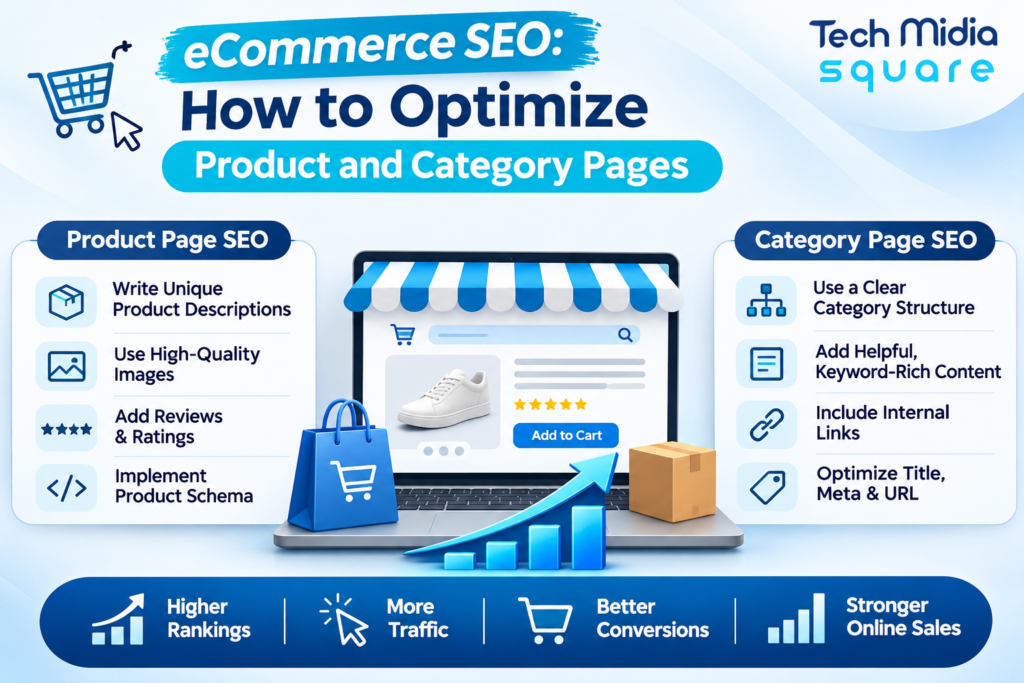
How to Optimize Ecommerce Category Pages
Category pages help shoppers discover multiple products within a specific product group.
For example, an online electronics store might have separate categories for wireless headphones, gaming laptops, and smartwatches.
Here are four practical optimization techniques.
1. Target Category-Specific Keywords
Choose keywords based on what customers search for when comparing products.
- Affordable wireless headphones
- Best gaming laptops
- Organic skincare products
- Men’s running shoes
Avoid targeting the same primary search intent across multiple category and product URLs.
2. Add Useful Category Descriptions
Don’t leave category pages with only product images and filters.
Add a short introduction explaining the products, available options, and what shoppers should consider before buying.
For example, a skincare category could explain differences between moisturizers for dry, oily, and sensitive skin.
3. Improve Internal Linking
Connect your homepage, category pages, subcategories, and individual product pages.
Example:
Homepage → Women’s Footwear → Running Shoes → Individual Product
This structure helps shoppers navigate your store and allows search engines to discover important pages.
4. Optimize Navigation and Filters
Product filters improve shopping experiences, but poorly managed filter URLs can create unnecessary crawl and indexing issues.
Use filters for relevant attributes such as size, color, brand, and price. Ensure important category and product pages remain accessible through crawlable links.
Product Pages vs. Category Pages: What’s the Difference?
| SEO Factor | Product Pages | Category Pages |
|---|---|---|
| Search intent | Specific products | Product groups |
| Keyword example | Nike Air Max running shoes | Men’s running shoes |
| Main content | Product details | Category descriptions |
| Primary goal | Product discovery and purchase | Product browsing and comparison |
| Schema | Product, Offer | Relevant category and breadcrumb markup |
Both page types are important. Your optimization strategy should reflect the search intent behind each URL.
Common Ecommerce SEO Mistakes
Avoid these mistakes when optimizing your online store:
- Duplicate descriptions: Reusing manufacturer content across products.
- Missing image alt text: Making product images harder to understand.
- Poor mobile experience: Creating difficult navigation on smartphones.
- Slow-loading pages: Using oversized images and unnecessary scripts.
- Broken internal links: Preventing shoppers and crawlers from reaching important pages.
- Keyword cannibalization: Targeting identical search intent across multiple URLs.
- Ignoring technical SEO: Overlooking indexing, canonical tags, and crawlability.
Expert Tips for Better Ecommerce SEO
If you’re managing an online store in the United States, start with your highest-value product and category pages.
Use Google Search Console to identify pages receiving impressions but fewer clicks. Review their search queries, update titles, improve descriptions, and strengthen internal links.
Additionally, monitor Core Web Vitals, mobile usability, product availability, and structured data.
For better AEO and GEO readiness, make product information clear, accurate, and easy to extract. Include concise answers to common shopper questions, such as sizing, shipping, materials, compatibility, and return policies.
These improvements help search systems understand your content, although visibility in AI Overviews or AI-generated answers isn’t guaranteed.
Frequently Asked Questions
What is ecommerce product page SEO?
Ecommerce product page SEO is the process of optimizing individual product pages with relevant keywords, unique descriptions, images, metadata, internal links, and structured data to improve organic search visibility.
How do I optimize ecommerce category pages?
Use category-specific keywords, descriptive headings, unique introductory content, relevant product listings, crawlable internal links, and user-friendly navigation.
Does product schema improve ecommerce SEO?
Product structured data helps search engines understand product details such as price, availability, and ratings. It can also make eligible pages appear with enhanced search results.
How often should I update product pages?
Review important product pages regularly, particularly when prices, availability, specifications, customer questions, or search trends change.
Can ecommerce SEO increase online sales?
Yes. Effective ecommerce SEO can attract shoppers with relevant purchase intent. However, conversions also depend on pricing, product quality, trust, website usability, and the overall buying experience.
Conclusion
Successful ecommerce SEO isn’t just about adding keywords to product descriptions. It’s about creating a website that helps shoppers discover, compare, and purchase products without unnecessary friction.
From unique product descriptions and optimized category pages to technical SEO and structured data, every improvement contributes to a stronger shopping experience.
Tech Midia Square helps U.S. businesses build search-friendly e-commerce websites through strategic optimization, technical SEO, and conversion-focused improvements.
Ready to Improve Your Ecommerce Search Visibility?
Looking to attract more qualified shoppers and strengthen your online store’s organic performance?
Explore E-commerce SEO Services by Tech Midia Square and discover how a strategic SEO approach can support your business growth.
Visit: Tech Midia Square